

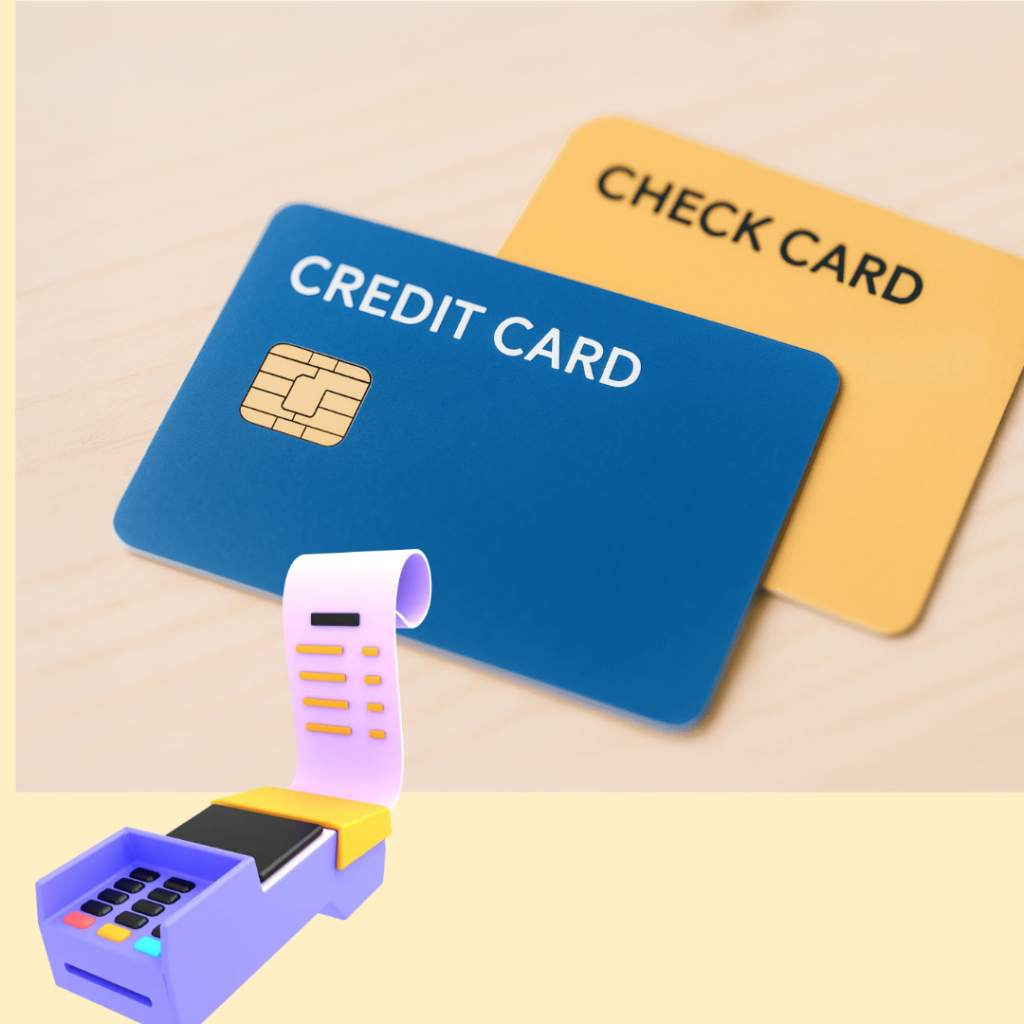
Cashing out credit card payments is an ideal cash flow is perfectly predictable. However, reality often differs. Have you ever faced a sudden liquidity gap? These are times when ready cash is scarce, but credit is available. Freelancers await invoices, entrepreneurs manage their business runway, and families face sudden emergencies. What do you do when liquid cash is scarce, but credit is available?
When liquid cash is scarce, but credit is available, the challenge isn’t just “getting money.” It’s about managing the Cost of Capital, the true price of borrowing money. Viewing your credit limit merely as “spending power” is a consumer mindset. Viewing it as a reservoir of potential liquidity is a strategic mindset. But how does one access that reservoir without incurring excessive costs?
If done incorrectly, cashing out credit card payments can trigger a cascade of fees and interest, compounding financial stress significantly. So, what’s the right way to approach this?
This guide acts as a liquidity management resource. We will move beyond simple “how-to” advice, analyzing the mathematics, mechanisms, and risks involved in converting credit to cash. This ensures you choose the route that preserves the maximum amount of your capital when cashing out credit card payments.
For comprehensive insights into managing your credit, consider exploring [External Link to Reputable Financial Source on Credit Card Management].
Defining Credit Liquidation in the Modern Economy
To navigate this landscape effectively, we must first define our actions. This is not standard spending; it is a financial conversion operation. What exactly is Credit Liquidation?
Credit Liquidation is a financial maneuver involving specific fee structures, such as Cash Advance versus P2P. Its goal is to convert your revolving credit (your credit card limit) into liquid cash. This process is essentially cashing out credit card payments for immediate liquidity.
“Spending credit” involves exchanging debt for goods or services. In contrast, “liquidating credit” involves exchanging debt for currency. This distinction is crucial, as financial institutions treat these two actions very differently. Are all methods of credit liquidation equally legitimate?
There is a spectrum of legitimacy here. On one end, you have Emergency Funding – using available credit to pay a cash-only obligation, like rent or a contractor. On the other end is Manufactured Spending – a high-risk game used by churners to generate rewards points. Banks aggressively police this activity. Understanding where you fall on this spectrum helps determine your risk tolerance and guides the method you should employ when considering cashing out credit card payments.
The Cost of Capital: Fees vs. Interest Rates
Before you execute a transfer, you must calculate the cost. “Free” money does not exist in this sector, especially when cashing out credit card payments. You are essentially buying time. What’s the true price tag?
The price tag comes in two forms: Upfront Fees and Interest.
The most dangerous trap is the Cash Advance APR. Standard purchases typically offer a 21-30 day “grace period” before interest starts, meaning no interest accrues if paid in full. However, cash advances accrue interest the moment the ATM dispenses the bill. Furthermore, the APR for cash advances is often significantly higher (25%+) than your purchase APR.
How do other methods compare? Contrast this with “Plastic-to-Cash” services or P2P transfers. These methods usually charge a higher upfront fee (3%–5%) but may preserve your grace period, depending on how the transaction is coded.
Cost Comparison Matrix
| Method | Upfront Fee (Cost of Entry) | Interest Trigger | Risk Level |
| ATM Cash Advance | $10 + 3-5% | Immediate (No Grace Period) | Low (Standard Feature) |
| P2P Transfer (Credit) | ~3% | Varies (Grace Period Possible) | Moderate (MCC Dependent) |
| Convenience Check | 3-5% | Immediate (Usually) | Low (Issuer Provided) |
| Plastic-to-Cash (Plastiq) | ~2.9% | Standard Grace Period | Low (Bill Pay Focus) |
Can I transfer money from my credit card to my bank account?
Yes, you can transfer money via direct deposit cash advances or third-party apps. Fees apply when cashing out credit card payments this way.
You cannot simply log into your banking app and “move” credit to checking, unlike a savings account. However, issuers and fintechs (financial technology companies) have built three primary bridges to facilitate this:
- Direct Deposit Cash Advance: Some issuers allow you to request a cash advance, deposited directly into your checking account. It takes 1-3 business days and triggers the Cash Advance APR immediately.
- Convenience Checks: These are physical checks mailed by your issuer. You write them to yourself or a third party. They function exactly like a cash advance.
- P2P Transfers: Use apps like Venmo or PayPal. Send funds from a credit card to a trusted third party, who then transfers the cash to their bank and withdraws it for you. Which P2P apps are best for this?
Method 1: The P2P Ecosystem (Venmo, PayPal, CashApp)
For the “Cash-Constrained Strategist,” the Peer-to-Peer (P2P) ecosystem is often the preferred route for cashing out credit card payments. It is faster than waiting for checks and often cheaper than ATM advances if the grace period is preserved. How does one execute this?
The Execution Protocol
- Link Your Card: Add your credit card as a funding source in the app.
- Verify the Fee: Expect a standardized ~3% fee. For example, sending $1,000 costs $30.
- Send to a Trusted Party: You generally cannot send money to yourself. You must send it to a spouse or trusted friend. That person then cashes it out to their bank and withdraws it for you.
Regulatory and Technical Constraints
This method is not without hurdles. You must navigate Micropayment Regulation Frameworks (rules for small digital payments). These apps have internal limits (e.g., $2,999.99 per week) and automated security flags designed to prevent money laundering and fraud. Moving large sums of credit rapidly can freeze your account when attempting to cash out credit card payments.
The “MCC” Risk
The hidden danger here is the Merchant Category Code (MCC). This code tells banks what kind of business processed a transaction. Every transaction has one. If the P2P app codes the transaction as “Money Transfer” rather than “Merchandise/Services,” your credit card issuer may recognize it as a cash equivalent. If this happens, you will be hit with the 3% P2P fee AND incur your bank’s Cash Advance fee and immediate interest. How can you avoid this double hit?
Method 2: Indirect Liquidation & Mobile Assets
If P2P methods are unavailable or your limits are too low, you enter the realm of indirect liquidation. This involves purchasing a liquid asset and converting it. This process is higher friction and usually higher cost when cashing out credit card payments.
Gift Card Arbitrage
This involves buying Visa/Mastercard gift cards, which count as purchases. You then use them to buy money orders or pay bills. However, liquidation costs and activation fees often drive the total “Cost of Capital” above 6-7%.
Mobile Assets
In niche scenarios, users look toward mobile phone credits. This involves using Direct Carrier Billing to charge items to your phone bill, then purchasing digital goods that can be resold or refunded. While this bypasses banking restrictions, it is inefficient due to high premiums on digital goods.
Decision Matrix: Selecting Your Liquidity Route
To wrap up this strategic analysis of cashing out credit card payments, use the following logic tree. It will help determine the best path for your specific liquidity crisis.
- Scenario A: “I need cash within 1 hour.”
- Strategy: ATM Cash Advance.
- Cost: High.
- Why: Speed is the priority. You pay a premium for immediate physical currency.
- Scenario B: “I need to pay a landlord or vendor who doesn’t take cards.”
- Strategy: Plastic-to-Cash Services (e.g., Plastiq) or P2P Transfer.
- Cost: Moderate (~3%).
- Why: These services are designed for this exact use case. They are least likely to trigger “Cash Advance” interest rates, preserving your grace period.
- Scenario C: “I am trying to generate points or meet a spending bonus.”
- Strategy: Stop.
- Cost: Potential Account Closure.
- Why: Banks employ sophisticated algorithms to detect “Manufactured Spending.” If you are liquidating credit solely for rewards, you risk having your accounts shut down entirely.
Strategic Takeaway
Liquidity is a tool, not a solution to solvency issues. When cashing out credit card payments, always calculate the full cost of capital (fees plus interest) and ensure your repayment plan is solid. By treating this as a business transaction, not a desperate measure, you maintain control over your financial narrative.
Frequently Asked Questions (FAQs)
Q: What are the legal implications of manufactured spending?
A: Manufactured spending itself isn’t illegal, but it often violates the terms and conditions of credit card issuers and rewards programs. Engaging in it can lead to account closures, forfeiture of rewards, and being blacklisted by financial institutions. It’s a high-risk activity not recommended for general liquidity needs.
Q: Which P2P apps are best for cashing out credit card payments?
A: Popular P2P apps like Venmo, PayPal, and CashApp can be used. However, they all typically charge a ~3% fee for credit card transactions. The “best” app often comes down to personal preference, existing network, and specific transaction limits. Always verify the fee and how the transaction is coded before proceeding.
Q: How quickly can I get cash using these methods?
A: ATM Cash Advances provide immediate cash. Direct deposit cash advances typically take 1-3 business days. P2P transfers can be near-instant between accounts, but transferring from the P2P app to your bank account can take 1-3 business days, with instant transfer options often incurring an additional fee.
Q: Can I avoid fees when cashing out credit card payments?
A: Generally, no. Financial institutions and third-party services charge fees (upfront or interest) for converting credit to cash because it’s a higher-risk transaction for them. The goal is to minimize these costs, not eliminate them entirely.
Q: What is an MCC, and why is it important?
A: MCC stands for Merchant Category Code. It’s a four-digit number assigned to a business by credit card networks to classify the type of goods or services it provides. For credit card cash-outs, the MCC is crucial because if a P2P or third-party service codes your transaction as a “money transfer” (cash equivalent) instead of a “purchase,” your credit card issuer may treat it as a cash advance, triggering higher fees and immediate interest.
Q: Is cashing out credit card payments a good long-term financial strategy?
A: No, it is generally not a good long-term strategy. It should be considered a short-term liquidity solution for emergencies or specific, well-calculated needs. The associated fees and interest can quickly erode your finances if not managed carefully with a solid repayment plan. It’s a tool for managing temporary liquidity gaps, not a substitute for sound financial planning or addressing solvency issues.
