


Cashing out credit card payments Have you ever found yourself in a situation where you have plenty of credit available, but zero cash in the bank, right when a cash-only emergency strikes? It’s a paradox that frustrates millions: being “asset rich” (or credit rich) but “cash poor.”
In these high-pressure moments, the phrase cashing out credit card payments often gets whispered as a taboo solution. Traditional financial advice screams “Don’t do it!” envisioning a spiral of debt and despair. But is that the whole story?
What if I told you that, when stripped of the stigma and executed with precision, this method possesses an unusual yet genuinely “good” quality? It is not just about desperation; it is about autonomy. It is the ability to become your own lender of last resort, bypassing the slow, bureaucratic machinery of traditional banking to access immediate liquidity.
In this deep dive, we are going to explore the strategic side of cashing out credit card payments. We will look at how to navigate the mechanics legally using assets like gift certificate sales, how to analyze the true cost of the credit card cashing fee, and ultimately, how to use this tool to protect your financial standing rather than destroy it.
Wait, How Can Converting Credit to Cash Be a Good Thing?
Let’s reframe the narrative. The “unusual good thing” about cashing out credit card payments is the concept of Velocity of Money.
In business and personal finance, a dollar stuck in a credit limit is potential energy. A dollar in your hand is kinetic energy. Sometimes, you need that kinetic energy now to stop a disaster.
- The Scenario: You have a mortgage payment due today. If you miss it, you pay a penalty and your credit score drops 50 points. You have $0 cash, but a $10,000 credit limit.
- The “Good” Choice: By cashing out credit card payments, you convert a portion of that limit into cash. You pay the mortgage on time. You avoid the credit score hit.
Here, the strategy acts as a financial circuit breaker. It buys you time. The speed at which you can access these funds often within minutes is a feature that no bank loan can match. It allows you to solve a solvency crisis instantly, turning a potential disaster into a manageable expense.
How Does the Process Actually Work Without Breaking the Law?
You might be wondering, “Is this legal?” The answer lies in how you do it. Legitimate cashing out credit card payments is not about faking transactions; it is about buying and selling real assets.
In the modern fintech landscape, this is most commonly achieved through digital vouchers.
The Mechanism of 상품권 판매 (Gift Certificate Sales)
The engine room of this strategy involves 상품권 판매 (gift certificate sales). Digital gift cards (like Cultureland, Happy Money, or department store vouchers) are unique because they are “near-cash” assets.
- The Purchase: You use your credit card to buy a digital gift certificate from a legitimate retailer. In your statement, this appears as a standard retail purchase.
- The Liquidation: You then engage in gift certificate sales by selling that digital voucher to a professional purchasing firm.
- The Deposit: The firm verifies the voucher code and deposits cash into your bank account.
This process is legal because you are exercising your property rights. You bought an item (the voucher) and you chose to sell it. The “good” part is that because it counts as a purchase, you often earn credit card reward points, and you benefit from the card’s interest-free grace period, unlike a direct cash advance from an ATM which accrues interest immediately.
Are You Paying Too Much?
Everything in finance has a price tag. For loans, it is interest. For cashing out credit card payments, it is the fee structure.
This is where you must be vigilant. The cost of this convenience is known as the credit card cashing fee
Forensic Analysis of the Fee
When you sell your gift certificate to a third party, they will not pay you 100% of its face value. They might pay you 85% or 90%.
- The Gap: That 10-15% difference is the fee.
- The Calculation: If you need $1,000 in cash, and the fee is 15%, you might need to purchase approx $1,176 worth of vouchers.
Is It Worth It?
A 15% 신용카드 현금화 수수료 sounds high compared to a 5% annual bank loan interest rate. But remember, we are paying for speed and accessibility.
- If the cost of not having the cash (e.g., evicted from home, legal fees, massive vendor penalties) is higher than the 15% fee, then paying the fee is the financially sound decision.
- The “good thing” here is clarity. Unlike compounding interest which can snowball secretly, this fee is a one-time, flat cost. You know exactly what you are paying upfront.
Resource for Financial Literacy: Understanding the difference between flat fees and APR is crucial. Investopedia provides excellent resources on how to calculate the “True Cost of Borrowing” to help you make informed decisions.
- External Resource: Investopedia – The True Cost of Borrowing
When Should You Pull the Trigger on This Strategy?
To prove that cashing out credit card payments can be a positive tool, let’s look at specific “Green Light” scenarios where the benefits outweigh the costs.
1. The Payroll Bridge
Small business owners often face a timing mismatch. Clients pay in 60 days, but staff need to be paid every 30 days.
- Strategy: The owner uses a business card to buy vouchers, executes a sale, and funds payroll.
- Result: The business remains operational. The cost is written off as a business expense.
2. The Credit Score Defense
You have a car payment due. Missing it means a “30-day late” mark on your credit report, which stays for 7 years.
- Strategy: You use cashing out credit card payments to cover the note.
- Result: You protected your long-term reputation for a small short-term fee.
In both cases, the liquidity provided a safety net that traditional banking could not deploy fast enough.
Glossary
To navigate this sector safely, you must understand the terminology. Below is a glossary of terms used in the context of credit liquidation and finance.
Core Concepts
- Liquidity (Marketability):
- Definition: How easily an asset can be converted into cash without affecting its market price.
- Context: Cashing out credit card payments is a “high liquidity” maneuver because it turns credit lines into spendable cash instantly.
- APR (Annual Percentage Rate):
- Definition: The yearly cost of borrowing funds, expressed as a percentage. This includes interest and fees.
- Context: While the credit card cashing fee is a one-time fee, if you fail to pay your credit card bill by the due date, the remaining balance will be subject to the card’s APR.
- Grace Period:
- Definition: The gap between the end of a billing cycle and the payment due date (usually 20-25 days). During this time, no interest is charged on new purchases if you paid the previous balance in full.
- Context: Smart users execute cashing out credit card payments at the start of a billing cycle to maximize this interest-free loan period (up to 45 days).
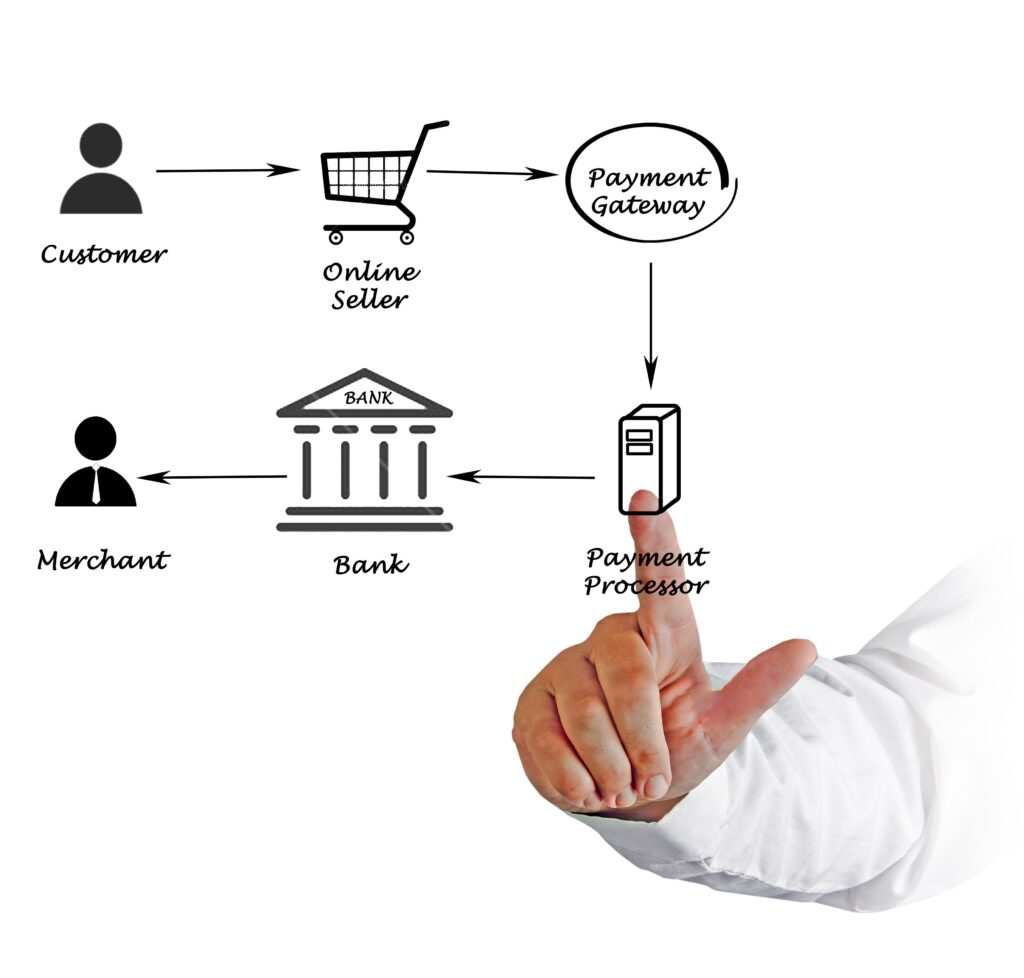
- PG (Payment Gateway):
- Definition: The technology that captures and transfers payment data from the customer to the acquirer.
- Context: When you buy a gift certificate online, the transaction is processed by a PG (like PayPal, Stripe, or Danal in Korea). The PG sees a “purchase,” not a “cash loan.”
- Solvency:
- Definition: The ability of an individual or company to meet their long-term financial obligations.
- Context: This strategy fixes liquidity (short-term cash), but it does not fix solvency (long-term wealth). It should not be used to mask a fundamental lack of income.
- Merchant Discount Rate (MDR):
- Definition: The rate charged to a merchant for payment processing services on debit and credit card transactions.
- Context: This is part of the ecosystem that determines the fees involved in buying the initial digital assets.
Comparison: Cash Advance vs. Cashing Out (Asset Liquidation
You might ask, “Why not just use the ATM with my credit card?” That is called a Cash Advance, and it is fundamentally different from the asset liquidation strategy we are discussing.
The Cash Advance Trap:
- Interest: Starts accruing the second the money leaves the machine. No grace period.
- Limits: Banks usually cap cash advances at 20-30% of your total limit.
- Credit Impact: It is flagged specifically as a “cash advance” on your report, which can signal financial distress to other lenders.
The Cashing Out (Asset Sale) Advantage:
- Interest: Follows standard purchase rules. You usually get a grace period.
- Limits: You can often utilize up to 100% of your purchase limit.
- Credit Impact: It appears as a retail purchase (e.g., “Online Shopping”), which looks neutral or positive (utilization aside) on a credit report.
- Cost: You pay the credit card cashing fee but avoid the immediate high-interest trap of the cash advance.
This distinction highlights why sophisticated users prefer the asset sale route.
The “Never” List
- Never give someone your credit card password or CVV code over the phone. Legitimate gift certificate sales transactions only require the voucher PIN number, not your credit card details.
- Never pay an “upfront fee” to unlock a limit. Fees should always be deducted from the payout amount.
- Never trust a rate that seems too good to be true. If the market fee is 15%, and someone offers 5%, it is likely a phishing scam.
The “Always” List
- Always check for a business registration number on the website.
- Always verify the identity of the buyer. Legitimate companies have verified reviews and a traceable digital footprint.
- Always have a repayment plan.
Regulatory Context: Government bodies constantly monitor the financial sector to prevent money laundering. Legitimate services will ask for identity verification to comply with these laws. The Financial Conduct Authority (FCA) (or your local equivalent) publishes guides on how to spot loan fee fraud.
- External Resource: Financial Conduct Authority – Loan Fee Fraud
Conclusion: From Stigma to Strategy
It is time to stop viewing cashing out credit card payments solely through the lens of fear. Yes, it carries risks. Yes, it costs money. But in the right hands, it is a powerful instrument of financial sovereignty.
The “good thing” about this strategy is that it empowers you. It allows you to leverage the creditworthiness you have built to solve immediate problems on your own terms. By utilizing mechanisms like gift certificate sales efficiently and understanding the trade-offs of the credit card cashing fee you transform from a passive victim of cash flow gaps into an active manager of your own liquidity.
Remember, the goal is not to stay in debt, but to use credit as a bridge to get to the other side of a crisis safely. Use this tool wisely, repay promptly, and keep your financial future secure.
FAQ: Your Quick Guide to Liquidity
Q: Is cashing out credit card payments illegal? A: No, provided you are purchasing legitimate goods (like gift certificates) and selling them yourself. However, using stolen cards or fabricating transactions is fraud. Always use your own card and legitimate asset trading platforms.
Q: What is a typical fee? A: Fees fluctuate based on market demand for the vouchers, but generally, you can expect to pay between 10% and 15%. Be wary of rates significantly higher or lower than this range.
Q: Can I use this for long-term loans? A: No. This is a short-term liquidity fix. The fees make it too expensive for long-term financing. It is best used for emergencies where you can repay the credit card bill within 30-45 days.
Q: How fast is the process? A: Unlike bank loans, cashing out credit card payments via digital voucher sales is usually instant or takes only a few minutes once the transaction is verified.
Q: Why do people use gift certificate sales for this? A: Gift certificates are the preferred asset because they are digital (instant delivery), easy to transfer (just a PIN code), and have high resale value compared to physical goods like electronics or jewelry.
